Mix Blox
- 4.5
- Rating
- 1.00M
- Installs
- Free
- Price
 Analysis by App-foxy
Mix Blox is the kind of puzzle game I can open for a few minutes without needing to learn a complicated system first. The central idea is easy to understand: place matching number blocks together and merge them. That simplicity is its strongest invitation, but it also means the quality of each move matters more than the short description suggests. A careless placement can make the board awkward, while a patient one can keep several useful combinations available.
I reviewed it as a casual number puzzle rather than as a long-form adventure or a competitive game. That distinction matters. If you want a calm activity for a queue, a coffee break, or a few minutes before bed, it has an appealing shape. If you need a deep campaign, a story, or a large collection of distinct puzzle rules, this is probably not where I would start. My overall impression is positive, with one important qualification: the game’s enjoyment depends heavily on whether you like repeating a simple rule and improving your decisions within it.
How the basic puzzle loop feels in practice
The first few rounds are approachable because the objective is immediately readable. You look for blocks carrying the same number, decide where a new piece should go, and try to create merges without closing off the useful space around them. There is no need to memorize a long tutorial or understand a fictional setting before the puzzle becomes playable. I appreciated that directness because it lets the game work as a quick mental reset.
You May Also Like

 Blood Strike: 2.5 Anniversary
Blood Strike’s Loadouts Turn Every Drop Into a Tactical Gamble
A close look at Blood Strike’s custom loadouts: how fast access to signature weapons reshapes its battle royale rhythm, rewards preparation, and narrows the gap between fights.

 Pandora - Music & Podcasts
Pandora’s Music Is Easy to Start, but Harder to Recover
Pandora’s strength is its low-effort path from a seed to a station. Its weak spot is how much confidence it asks you to place in connection, setup, and quiet recovery.

 8 Ball Pool
 Is Built on Rivalries, Rematches, and Routine
A close look at the rivalries, rematches, shared routines, and unanswered safety questions that turn a quick pool match into a persistent mobile community.

 Samsung Music
’s Quiet Strength Is Playing What You Already Own
Its reach comes less from spectacle than from dependable access to a personal library. That simplicity is both the app’s strongest retention engine and its ceiling.

 AccuWeather: Weather Radar
AccuWeather Review: A Quick, Clear Forecast for Everyday Decisions
For everyday plans, the best forecast is the one you can understand quickly. AccuWeather makes rain timing, radar, and local conditions easy to act on, with a few trade-offs.

 Hill Climb Racing
Why Hill Climb Racing Still Turns Crashes Into One More Run
A tiny car, a bumpy hill and one more upgrade: Hill Climb Racing keeps resurfacing because its simple chaos makes every near-miss feel personal.
More From Our News Desk



What makes the loop more interesting than simple matching is the difference between an available merge and a good merge. Combining two blocks can solve the immediate problem while leaving an awkward gap or an isolated number elsewhere. I found myself thinking one or two placements ahead, especially when several matching options were visible. That small layer of planning gives the game more staying power than a purely reactive matching title.
A useful habit is to avoid treating the largest visible number as automatically important. Sometimes the better move is to preserve a pair that can be merged later, rather than immediately combining whatever looks most satisfying. This is one of the game’s less obvious lessons: a tidy-looking board is not always a healthy board. Space, future access, and the ability to bring similar values together matter more than making the biggest number as quickly as possible.
I also recommend scanning the whole board before touching anything. In a fast arcade puzzle, reacting instantly can be part of the fun, but Mix Blox rewards a short pause. Look for clusters that can be combined, then check whether the resulting block will obstruct another route. That simple scan turns the game from number spotting into a compact planning exercise.
Why the simple rule can remain engaging
The appeal comes from the tension between order and clutter. At the beginning, the board feels manageable and combinations are easy to see. As more values accumulate, every open space becomes valuable. I enjoyed that gradual change because the game does not need elaborate mechanics to create pressure; the arrangement of the blocks does most of the work.
This also makes it suitable for different moods. I can play casually when I am only interested in passing time, or I can take each placement seriously when I want a small strategic challenge. The same board can feel relaxing after a good sequence and surprisingly demanding after a few poor choices. That flexibility is a genuine strength for a free puzzle game.
Still, the loop is intentionally narrow. Players who enjoy word puzzles, logic grids, or level-based games with clearly different objectives may find the repetition limiting. Mix Blox is not trying to replace those experiences. Its best use is as a compact number-merging diversion, not as a broad puzzle collection.
Progress, pressure, and the cost of a bad move
The pressure in Mix Blox comes from board management rather than from a complicated timer or an elaborate progression system. Every placement changes the future shape of the puzzle. When the board is open, mistakes are easy to recover from. When space becomes scarce, a decision that seemed harmless several turns earlier can become the reason the next useful merge is inaccessible.
I found it helpful to think in terms of flexibility. A move that creates one immediate merge but blocks several open areas may be weaker than a move that leaves multiple options available. This is especially useful when the same number appears in different parts of the board. Joining the closest pair may be convenient, but joining the pair that improves the surrounding layout can be the smarter choice.
Another practical tip is to avoid building tall or valuable blocks in a corner simply because the corner looks safe. A corner can protect a block from accidental disruption, but it can also make that block harder to use later. I would reserve a corner for a piece that is unlikely to need frequent access, while keeping developing combinations in positions where other values can still reach them.
The game can therefore create a mild form of pressure without needing dramatic presentation. I sometimes noticed that the most frustrating moments were not caused by a difficult number, but by a board that had become visually crowded. That is a fair kind of challenge when the result follows from earlier choices. It also means new players may initially blame the next piece or the layout when the real problem was an earlier commitment.
For everyday use, that makes the game easy to fit into short sessions. I could imagine playing it while waiting for an appointment, during a commute when it is safe to do so, or between household tasks. The important caveat is that a short session can still feel unfinished if I stop just after creating a difficult board. Players who prefer clear stage endings may enjoy it less than those who are comfortable with an open-ended puzzle rhythm.
Where spending enters the experience
Mix Blox is free to download and play, which lowers the barrier to trying it. It also includes in-app purchases priced from $0.99 to $3.49 per item. That is the relevant spending context I would keep in mind before installing it. The existence of those purchases does not by itself tell me how necessary they are during play, so I would not promise that they are either essential or entirely avoidable.
My practical advice is to begin without spending and judge the normal puzzle loop first. If the matching and merging itself is enjoyable, the game has already demonstrated its main value. If the basic loop does not hold your attention, a purchase is unlikely to solve that underlying issue. This is a healthier way to approach any free puzzle game: decide whether the core activity works for you before considering optional extras.
Parents may also appreciate knowing that the content rating is Everyone. That makes the game broadly suitable from a content perspective, although purchase controls on a device are still worth checking whenever children use a free-to-play title. I would treat that as ordinary device housekeeping rather than as a criticism of this particular game.
Is the challenge fair, or does spending change the contest?
For me, the most important fairness question is whether success comes mainly from recognizing combinations and managing space. In Mix Blox, those decisions are the part I can directly control. I can improve by slowing down, preserving open routes, and resisting attractive but short-sighted merges. That gives the puzzle a fair learning curve: better results should come from better board reading, not merely from tapping faster.
At the same time, I would be careful about making stronger claims than the available purchase information supports. The game has paid items, but I cannot responsibly describe their exact effects or say whether they influence a particular outcome without seeing those effects in play. For a reader deciding whether the experience is competitive, the safest conclusion is that it works best as a personal score-and-decision puzzle rather than as a confirmed level playing field between players.
That distinction is important because “fair” can mean two different things. A solo puzzle can feel fair when its obstacles are understandable and its mistakes are connected to your choices. A competitive game needs additional confidence that players receive comparable tools and that purchases do not create an advantage. I would recommend Mix Blox confidently as a personal puzzle challenge, but I would not frame it as a competitive title based only on its number-merging format.
The cleanest way to test the balance is to play several sessions without buying anything. Notice whether your decisions explain the results. Do boards improve when you plan more carefully? Can you identify why a run ended? If the answer is yes, the game is giving you useful feedback through its layout. If you feel that progress depends on an item rather than on your choices, then the purchase model becomes more relevant to your decision about continuing.
I also like that the game’s central skill is transferable from one session to the next. You can develop a personal approach: protect open space, delay certain merges, or prioritize keeping similar values within reach. That kind of improvement feels more satisfying than simply collecting rewards. It gives the free portion a reason to exist beyond encouraging an eventual purchase.
What I would check before committing to it
Mix Blox was released on December 16, 2021, and the current version is 1.10.0. It runs on Android 7.0 or later, so compatibility should be reasonable for many older Android devices, provided the phone meets that minimum requirement. I would still check the device’s available storage and current system behavior before installing, especially on an older phone where any game can feel less responsive than expected.
The game has attracted more than a million installs, with an average rating of 4.5 from roughly fifty-eight thousand ratings and about four thousand written reviews. Those figures suggest that the straightforward format has found a substantial audience, but they should be read as context rather than a guarantee that it will suit every puzzle preference. A popular casual game can still feel too repetitive for someone who wants varied objectives.
The developer is Gimica GmbH. I would approach the title as a focused casual puzzle from that developer, not as a large multi-mode platform. That expectation helps avoid disappointment. The store summary points to finding and merging blocks with the same number, and that really is the heart of the experience. The game’s value comes from how satisfying that rule feels over time, not from pretending it offers a different genre.
One question many players have is whether it is suitable for a quick, interruption-prone session. In my experience, yes, because the basic action is easy to understand and does not require a long narrative sequence. However, the mental state of the board matters. If you leave in the middle of a crowded arrangement, you may need a moment to reconstruct your plan later. I would play it in short bursts, but I would pause at a natural point rather than right before a difficult decision.
Another question is whether it is a good choice for someone who dislikes numbers. I would say it depends on what you dislike about them. There is no need for advanced mathematics; the numbers function mainly as matching symbols and progression markers. But if seeing numerical blocks repeatedly feels less appealing than colors, words, or shapes, the theme itself may not hold your interest. A visual matching alternative would be a better fit in that case.
Players who want a relaxing game should also understand that “relaxing” does not mean completely effortless. The early part can feel gentle, but crowded boards demand concentration. That is a useful middle ground for me, though not for everyone. If you want something you can play almost automatically while watching another screen, a simpler idle or tapping game may be more comfortable.
How it compares with familiar puzzle alternatives
Compared with traditional match-three games, Mix Blox feels less focused on clearing colorful patterns and more focused on the long-term position of individual values. In a match-three title, a chain reaction can be the main reward. Here, I pay more attention to whether a merge improves the board’s future shape. Someone who enjoys planning several moves ahead may prefer this approach, while someone who wants frequent visual explosions may find it restrained.
Compared with classic falling-block games, the pressure is different as well. Falling-block puzzles often demand quick spatial rotation and immediate reactions. Mix Blox gives me more room to inspect the board and choose a deliberate placement. That makes it more approachable for players who enjoy strategy but do not want reflexes to dominate. On the other hand, fans of fast timing may find its pace too measured.
It also differs from level-based logic games because the satisfaction is less about reaching a new rule or solving a one-time arrangement. The challenge comes from repeating the same basic objective while trying to manage the board better. I would choose Mix Blox over a traditional logic title when I want a flexible, replayable diversion. I would choose the logic title when I want a puzzle with a distinct solution and a clear sense of completion.
That comparison helps define its audience. It is a good middle option for someone who likes number puzzles but wants less pressure than a reflex game. It is a weaker choice for anyone looking for a story, a large variety of mechanics, or a competitive multiplayer structure. The game does not need to be all of those things to be worthwhile, but knowing what it is prevents the wrong expectations.
My trust verdict after weighing the trade-offs
My recommendation is to try Mix Blox if you enjoy compact number puzzles and like improving through board awareness. The free entry makes that decision easy, and the Everyone rating makes it broadly approachable from a content standpoint. The combination of simple rules and increasingly valuable space gives it more thoughtfulness than its short description might suggest.
I would not recommend it to someone who needs constant novelty. The same merging principle remains central, so the experience depends on whether you enjoy refining a repeated skill. I would also hesitate to suggest it as a competitive game, because the presence of purchases is confirmed while their precise role in play is not something I would assume. For a solo casual puzzle, that uncertainty is manageable; for a fairness-sensitive competition, it deserves more caution.
The most useful way to play is to treat each board as a planning problem rather than a race toward the largest number. Scan before moving, protect flexible spaces, and ask what a merge will make possible afterward. Those habits reveal the game’s real depth and reduce the feeling that outcomes are arbitrary. They also give you a clear test of whether the puzzle is rewarding: if thoughtful choices gradually feel better, the loop is doing its job.
With a 4.5 average and more than a million installs, Mix Blox has clearly connected with many casual players. My own verdict is that it earns a place on an Android phone when I want a small, focused mental break without a story or a complicated ruleset. I would start with the free experience, keep spending optional, and decide based on the quality of the merging itself. If that modest loop is the kind of repetition you find satisfying, this game can become a dependable little puzzle companion.
FAQs for Mix Blox
01What is Mix Blox and how does the game work?
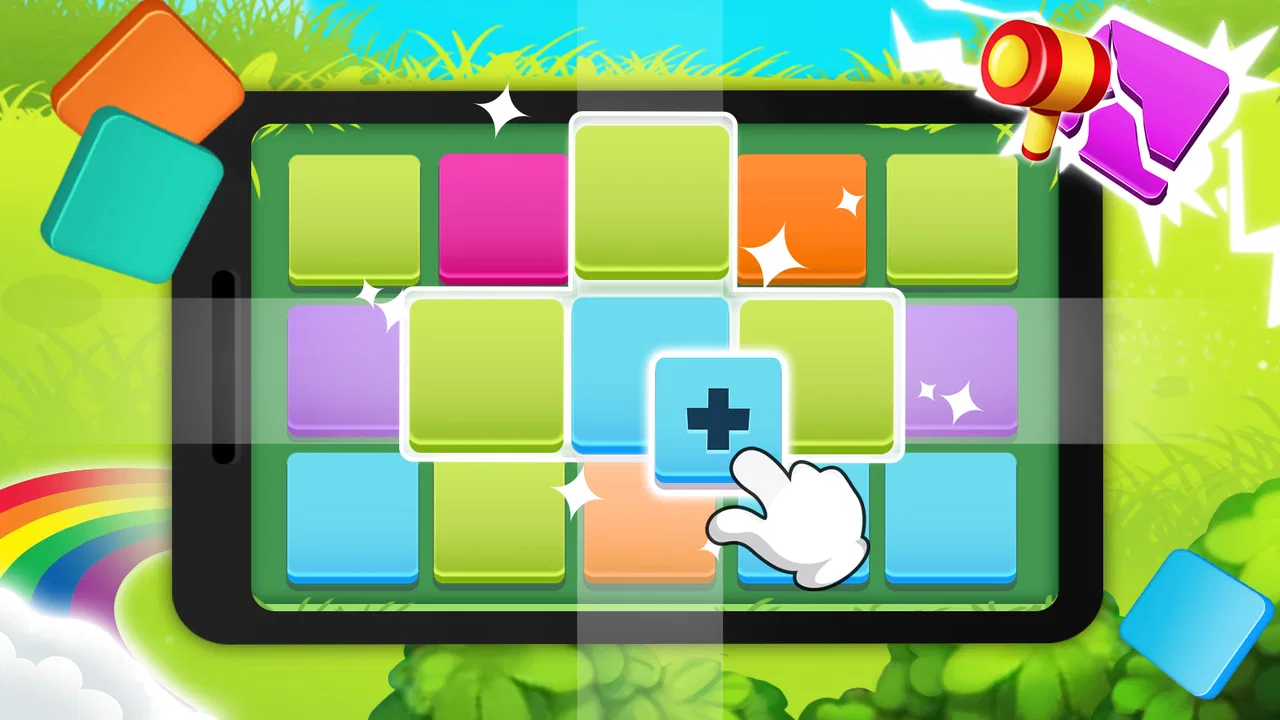
Mix Blox is a casual block-matching puzzle game focused on arranging and combining colorful pieces on a board. During testing, the gameplay felt easy to understand but increasingly challenging as the available space became limited. Players generally need to plan several moves ahead, create combinations, and clear blocks efficiently rather than placing pieces randomly. It is designed for short sessions, making it suitable for quick entertainment on Android or iOS.
02Is Mix Blox free to download and play?
Mix Blox can generally be downloaded free of charge, although the exact monetization options may depend on the version available in your region and on your device’s app store. Free gameplay may be supported by advertising, optional purchases, or both. Before installing, check the store listing for details about in-app purchases, subscription terms, and whether any paid items provide extra moves, remove advertisements, or unlock additional content.
03Does Mix Blox require an internet connection?
Mix Blox is primarily suited to offline-style casual play, so many of its core puzzle features may remain available without a continuous internet connection. However, an internet connection can still be required for advertisements, analytics, cloud-related features, updates, or restoring purchases. Availability may vary between releases, so users who want to play while traveling should test the game in airplane mode after installation.
04Is Mix Blox suitable for children and beginners?
Mix Blox uses straightforward puzzle mechanics that beginners can usually learn quickly, making it accessible to a broad range of players. There is no need to master complicated controls, and the gradual challenge can help keep sessions engaging. Parents should nevertheless review the game’s store rating, advertising behavior, privacy information, and in-app purchase settings, particularly if children will be playing on a shared device.
05What should I check before downloading Mix Blox?
Before downloading Mix Blox, verify that your Android or iOS device meets the listed compatibility requirements and has enough free storage for the installation and future updates. It is also worth checking recent user reviews, the developer’s privacy policy, permissions, advertising details, and the presence of in-app purchases. Since features can change between versions, rely on the current official store listing rather than older descriptions.
Pros
- Simple drag-and-drop controls are easy for beginners to learn.
- Short levels make it suitable for quick gaming sessions.
- Colorful visuals give the puzzle board a cheerful appearance.
- Increasing difficulty keeps the gameplay challenging over time.
- Works well as a relaxing
- low-pressure brain-training game.
Cons
- Some levels may feel repetitive after extended play.
- Progress can depend heavily on finding the correct block placement.
- Limited gameplay variety may reduce long-term appeal.
- Mistakes can be frustrating when a nearly completed board fails.
- Ads may interrupt play in the free version.

Mix Blox
Gallery